Autumn
£13.20 for 12
£47.30 for 48
Winter flowering crocus are more dainty than their large flowering Dutch cousins. My mother always had a bowl of these on the kitchen windowsill, much admired for their beauty and loved by the cat. They are grown outdoors in the open or a cold frame and simply moved inside once they start to make flowers. They are equally effective in selected spots in the garden.
The larger and later flowering (March) Dutch crocus are one of the most impactful of all the early flowering bulbs. Their colour glows in the spring sunshine when they open but, they remain closed during bad weather and at night, protecting their nectar for visiting bees and butterflies on sunny days.
They have many uses; planted in a border as spring bedding, planted in small groups in a herbaceous border or rockery adding early colour, planted in pots and containers both for outdoor and indoor use, and using the large flowering ‘Dutch’ crocus in grass.
They are very easy to grow but do need a sunny aspect, for like many bulbs they need summer warmth to remain free flowering. Plant from the end of September until late November. They will increase rapidly year on year. Every four to five years check for signs of overcrowding, typically reduced flowers or stunted growth. The best time to divide crocus is in September, if you can find the corms. The easier alternative is to wait until after they have finished flowering and their foliage has begun to die back, usually in late spring or early summer.
A few other pointers to bear in mind:-
• Plant the corms 5-7.5cm (2-3 inches) deep. Planting too deep is often the cause of crocus failing to flower and not readily increasing
.
• Crocus like a well-drained sandy loam and an open sunny aspect, they need summer warmth to remain free flowering. Plant on a layer of sand if the soil is heavy and not well drained.
• Add potash when planting and they will thrive.
• In grass roll back a turf, add a layer of loam compost and potash, place the corms and replace the turf, treading down to remove any air pockets.


Autumn is just over six weeks away, and we are all gearing up for the start of the great bulb despatch, or maybe even dispatch, to use contemporary English. Despatch was more prevalent in older British literature and documents, but is now considered archaic, a sentiment I’m starting to identify with, especially after a week with a summer cold.
With no rain forecast for the next 2 weeks, now is the time to enjoy the garden. Apart from deadheading and running the hoe through the border, there is little that needs to be done. On the horizon is hedge trimming, and nesting season is just about over. If you can see birds frequently flying in and out of your hedge, you still have nesting birds. Just because you see a nest it does not mean it is still active.
A consistent watering routine is going to be important. Many plants are remarkably resilient, but there are those that, once lost due to a lack of water, will not recover. Much the same as taller daffodils in pots, once they dry out and lean over no amount of resuscitating water will save them.
The next few weeks are a good time to ensure you have all the necessary supplies ready and on hand for when bulb planting starts.
This is what you need:-
Nutrient enriched topsoil
Compost
Horticultural grit
Sharp sand
Perlite
Bulb fibre
Adding organic matter to the border is always beneficial; lightly fork in supplies from your compost heap a few weeks before planting.
Most importantly, don’t forget to make your bulb order.
Enjoy your garden,
Paul Blom

It was only in 2019 that the Tulip Festival at Morton Hall was founded as the Midlands Bloms Bulbs show. In only four years, and despite the pandemic, it has become a hugely popular event renowned throughout the area and beyond.
This is a unique collaboration between Bloms Bulbs, Morton Hall Gardens and the Royal Shakespeare Company which receives the admission proceeds as part of Morton Hall’s long-standing support for the costume workshop.
Tulips at Morton Hall are planted in highly refined colour schemes in the formal gardens and in many elegant pot combinations to provide visitors with inspiration for their own plantings. Alongside the tulips, there is information about each variety and members of the Morton Hall gardening team are present to answer questions about tulip planting and care.
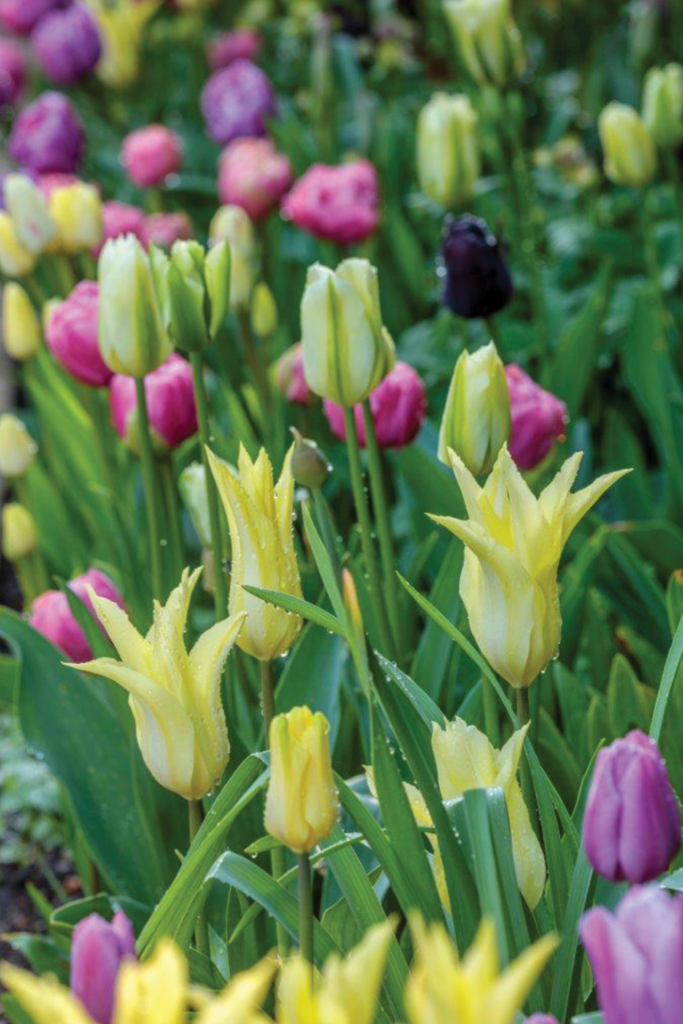
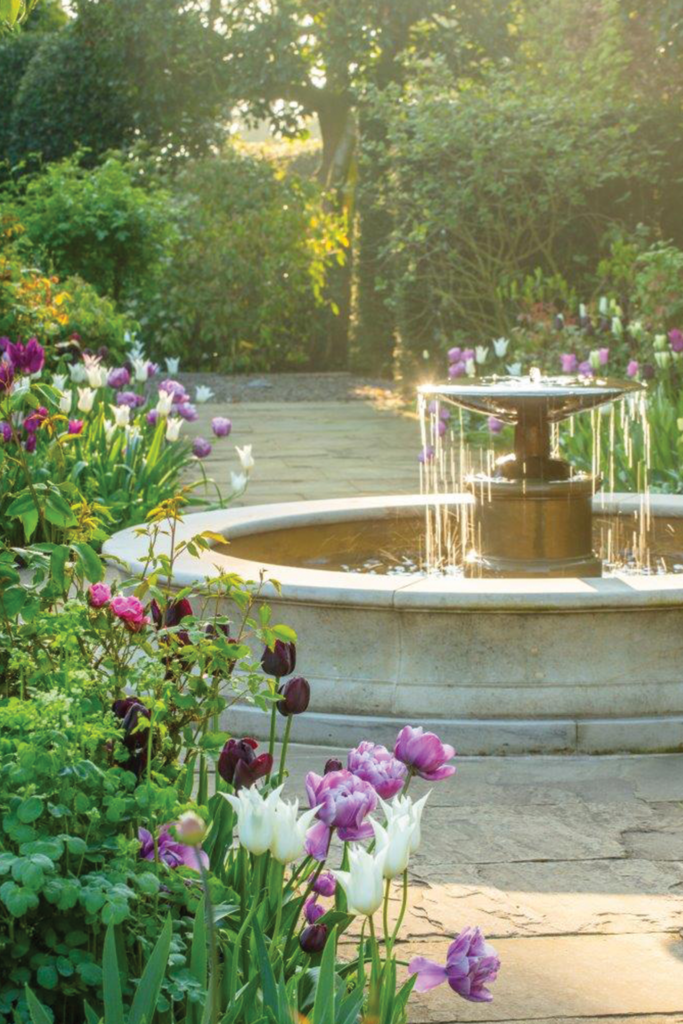
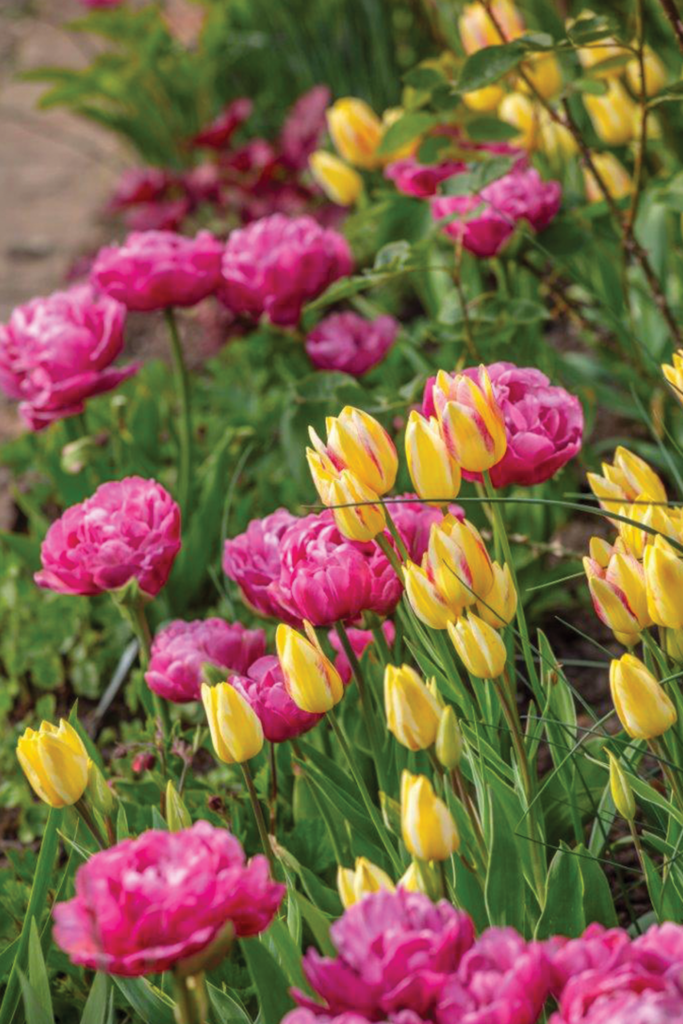
In addition to tulips in borders and pots, there is a stunning cut flower show hosted by Bloms with many more varieties and their expert advice at hand.
The colours and textures of the tulips are mirrored by a display of resplendent costumes from RSC productions which adds another festive element to the event.
Away from the tulip hubbub, visitors may stroll through Morton Hall’s tranquil Japanese woodland garden and dramatic Rockery with their serene spring displays. There are also 3 acres of Parkland Meadow with naturalized bulb planting to be admired.
A large marquee on the East lawn provides space and shelter for more than 150 guests. A variety of delicious meals and snacks are served throughout the day.
To facilitate access to the gardens and provide visitors with the best possible experience, tickets are timed and must be pre-booked. Ticket sales commence at the end of September 2023.
Tulip Festival 2024
4 to 6 May, 10 am to 5 pm. Last entry at 3.30 pm. To book, visit the garden homepage www.mortonhallgardens.co.ukand click on the red banner which takes you through to the RSC booking site.